
Quick answer
Multiple bus operators run daily services between Sapa and Ha Giang Province, with departures available throughout the day and overnight options for those continuing to the Ha Giang Loop. Journey times typically range from six to eight hours depending on the route, road conditions, and stops. Services operate year-round with no entrance fee for the transportation corridor itself, though individual operator fares vary based on bus type and booking channel.
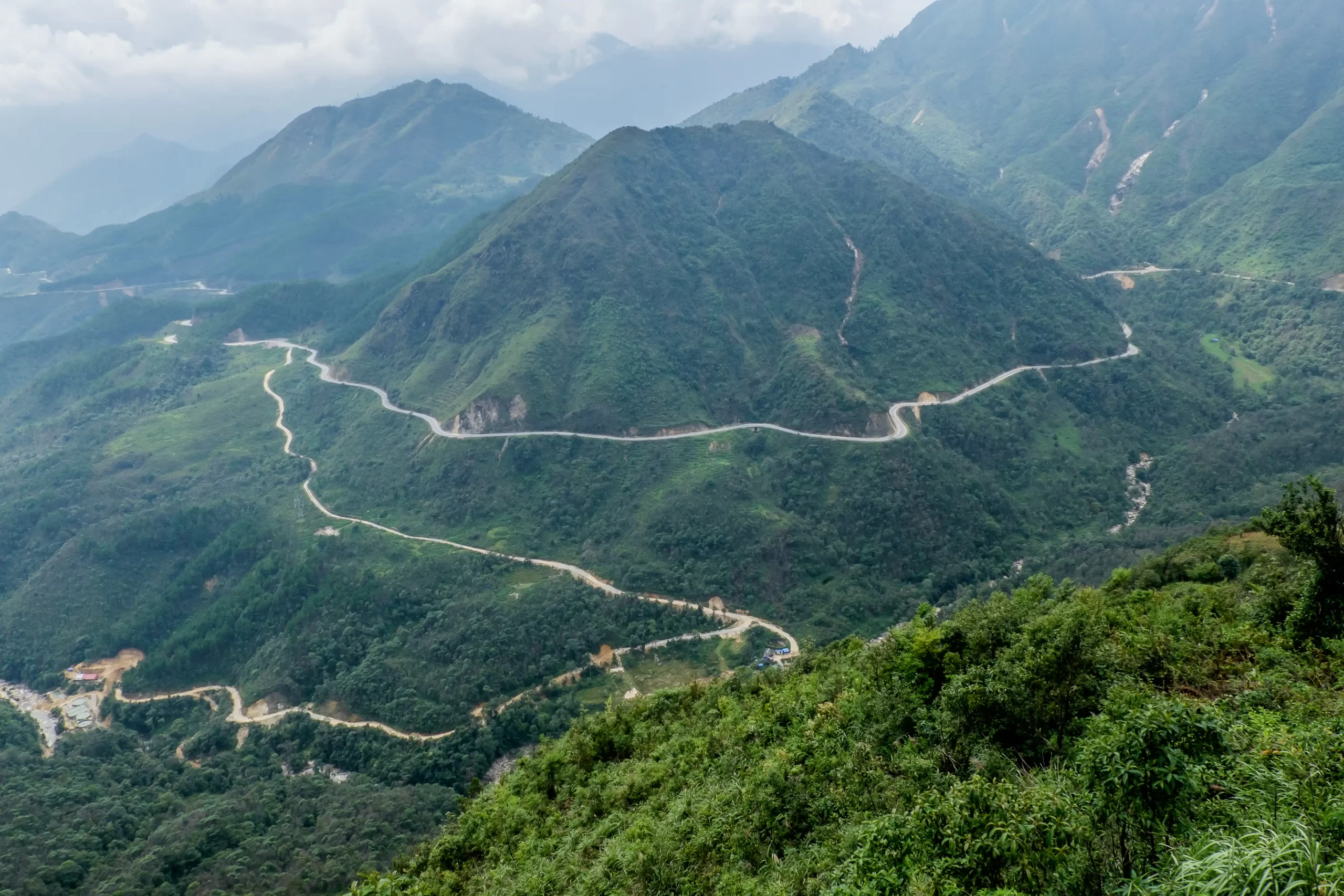
The mountain corridor linking Sapa to Ha Giang carries no direct express highway—every bus navigates a network of provincial roads threading through Lao Cai Province before descending into Ha Giang's limestone valleys. Most services depart from Sapa's main bus station near the town center, with a handful of operators offering hotel pickup for an additional fee. The route itself traces the edge of the Hoang Lien Son range before turning east toward the Red River tributaries that carve Ha Giang's karst geography. Operators serving this route split into three categories: government-run sleeper buses with fixed schedules, private minivan services that fill and depart, and tourist-oriented coaches that bundle the transfer with onward Ha Giang Loop packages. The sleeper buses dominate overnight departures, with reclining berths suited to the six-hour minimum crossing. Daytime minivans seat twelve to sixteen passengers and stop less frequently, shaving an hour off the schedule when roads are clear. Tourist coaches, often booked through Sapa guesthouses, include a guide and pre-arranged Loop motorcycle rentals but command a premium over independent options. Road conditions govern journey reliability more than operator choice. The stretch between Bac Ha and Xin Man remains unpaved in sections, and landslides during the June-to-September monsoon can add two hours or force rerouting through longer valley roads. Most operators halt for a single meal break near the halfway point, typically at a roadside stop in Bac Ha district where vendors sell grilled corn and hill-tribe textiles. The final descent into Ha Giang town offers the first view of the Dong Van plateau's limestone towers—the geological signature that defines the Loop's northern arc. Bus terminals in Ha Giang town sit three kilometers from the downtown guesthouse zone, and most arrivals connect with motorbike rental shops within walking distance. Travelers continuing immediately onto the Loop should confirm their bus arrives before 15:00 to allow daylight for the initial climb to Quan Ba, the first overnight stop on the standard three-day circuit. Services running year-round mean no seasonal closures, but seat availability tightens during Vietnamese holidays when domestic tourism peaks and advance booking shifts from optional to required.
“The route itself traces the edge of the Hoang Lien Son range before turning east toward the Red River tributaries that carve Ha Giang's karst geography.”
Routes and Logistics for the Sapa to Ha Giang Loop Bus
The route from Sapa to Ha Giang connects the Lao Cai province to the Ha Giang mountainous region. Travelers typically transit through Lao Cai city before taking a bus along National Route 279 and QL2 to reach Ha Giang City.
Sapa to Lao Cai bus, then transfer to Ha Giang route via QL279
Private transfer via QL279 and QL2
Direct transfer via QL279
Operating Hours and Service Availability for the Sapa to Ha Giang Loop Bus
Bus services between Sapa and the Ha Giang Loop operate on a continuous schedule, offering consistent availability throughout the week. Travelers can access transportation options at any time to suit their travel itinerary.
| Monday | 00:00–23:59 | |
|---|---|---|
| Tuesday | 00:00–23:59 | |
| Wednesday | 00:00–23:59 | |
| Thursday | 00:00–23:59 | |
| Friday | 00:00–23:59 | |
| Saturday | 00:00–23:59 | |
| Sunday | 00:00–23:59 |
Understanding Costs for the Sapa to Ha Giang Loop Bus
There is no public entrance fee for the Sapa to Ha Giang bus route. Costs are determined solely by the private transportation operator selected for the journey.
Travelers pay only for private transportation services, with final prices varying based on the specific bus operator and vehicle class chosen.
Best Time to Travel: Seasonal Windows for the Sapa to Ha Giang Loop Bus
The optimal window for traveling between Sapa and Ha Giang occurs during the shoulder seasons of spring and autumn. These periods provide stable weather and clear road conditions across the Northern Highlands.
March to May
Moderate crowdsMild temperatures, 15°C to 25°C
This period features blooming flowers and lower rainfall. It offers comfortable conditions for bus travel through mountain passes.
September to November
Moderate crowdsCool, dry air, 12°C to 23°C
Harvest season turns the terraced fields golden. Stable weather reduces the risk of road disruptions during the trip.
June to August
High crowdsHeavy rain, 20°C to 30°C
Summer brings frequent monsoon rains and occasional landslides. Travel plans often require flexibility due to potential delays.
December to February
Low crowdsCold, misty, 5°C to 15°C
Temperatures drop significantly, particularly at higher elevations. Dense fog can limit visibility on mountainous transport routes.
Verdict: The best time to travel is during the dry months of March, April, September, or October for optimal road visibility and temperate weather.
Preparation Checklist for the Sapa to Ha Giang Loop Bus
Complete these steps before departure to ensure smooth passage through northern Vietnam's mountainous terrain.
-
Confirm your bus booking and pickup location — Operators require advance reservation; verify your Sapa hotel or meeting point.
-
Carry your passport or Vietnamese ID — Checkpoint inspections are routine along the Lao Cai–Ha Giang route.
-
Pack layers for high-altitude temperature shifts — Passes exceed 1,500 meters; night buses experience significant temperature drops.
-
Bring motion sickness medication if needed — The route includes steep switchbacks and extended mountain curves.
-
Download offline maps for Ha Giang Province — Mobile coverage is intermittent beyond Ha Giang city limits.
-
Secure Vietnamese dong in smaller denominations — ATMs become sparse after leaving Sapa; rural stops rarely accept cards.
Check availability
Frequently asked questions about sapa to ha giang loop bus
Everything you need to know about sapa to ha giang loop bus